
Functional behaviour assessment
Before changing a behaviour, we understand it. The FBA maps the function — escape, attention, sensory, access — and the plan addresses the function, not the surface.
Naturalistic, ethically delivered ABA for children with autism and related developmental conditions. Senior behaviour analysts, paediatrician-supervised plans, parent-led generalisation between sessions.
A 30-minute consultation with a developmental paediatrician or senior therapist. We listen, observe, and give you an honest read on whether aba therapy is the right starting point.
Applied Behaviour Analysis (ABA) is a therapy that teaches children practical skills — communication, self-regulation, daily-living independence — by understanding why a behaviour happens and changing what surrounds it. It is one of the most-studied interventions for autism. At NeuroNurture, ABA is delivered online, 1-on-1, by senior behaviour analysts working under a developmental paediatrician’s supervision.
The core idea is simple: children repeat what works for them. If a meltdown reliably ends a demand, meltdowns get rehearsed. If a word reliably brings a toy, words get rehearsed. ABA works by changing what happens around a behaviour, so that the skills a family wants — asking, waiting, recovering, dressing — become the things that actually work for the child.
The next question parents ask is usually about ABA’s reputation. It deserves a straight answer.
ABA, like every long-running clinical discipline, has versions. The version published in the late 1980s — forty hours a week of seated trials, compliance as the metric, hand-flapping as a target to extinguish — caused real and enduring harm to autistic children, and the autism community has been right to say so loudly.
The version we practise looks materially different. It follows Naturalistic Developmental Behavioural Intervention (NDBI) principles: child-led activities, teaching embedded in play, reinforcement built into the child’s own interests. We do not target stimming. Eye contact is not a target unless it has been functionally stripped from the child by repeated negative experiences. Making a child appear neurotypical is not the goal; giving the child skills that expand their own access to the world is.
We measure success in functional independence and family-reported quality of life — not in the number of trials completed.
ABA has the strongest evidence base for children with autism spectrum disorder, and that is where most of our referrals come from — both confirmed diagnoses and children still under assessment. It also helps children with ADHD whose behaviour challenges are interfering with learning or family life, children with limited functional communication regardless of diagnosis, and children who learn a skill in one setting but lose it everywhere else.
Age matters less than parents expect. We work with children from age 2 to 18; the plan changes shape with the child. For a 3-year-old the targets are usually first requests and transition tolerance. For a 10-year-old they may be emotional regulation, independence routines, and school readiness.
ABA is also not the only path. For most autistic children we use ABA as one element of a multi-modal plan alongside speech therapy, occupational therapy, and parent coaching — not as the entire plan.
Communication ranks first: requesting, refusing, commenting, sharing attention. Self-regulation ranks alongside it: emotion-naming, transition tolerance, recovery from overstimulation. Daily-living independence comes shortly after — eating, dressing, sleeping, toileting.
Every target has the same test applied to it: does this skill increase the child’s access to the things they want? If the honest answer is that it mainly makes the child more convenient to adults, it does not go in the plan.
It starts with a functional behaviour assessment (FBA). Before changing any behaviour, we map its function — escape, attention, sensory, access. A child who throws a plate to escape a demand and a child who throws a plate to get a reaction need opposite responses. The FBA is why two children with the same behaviour can have very different plans.
The plan is authored under paediatric supervision. Our developmental paediatrician reviews the assessment, signs off on the plan before the first session, and re-reviews the data every four weeks. If the trajectory stalls, the plan changes — intensity, targets, or method.
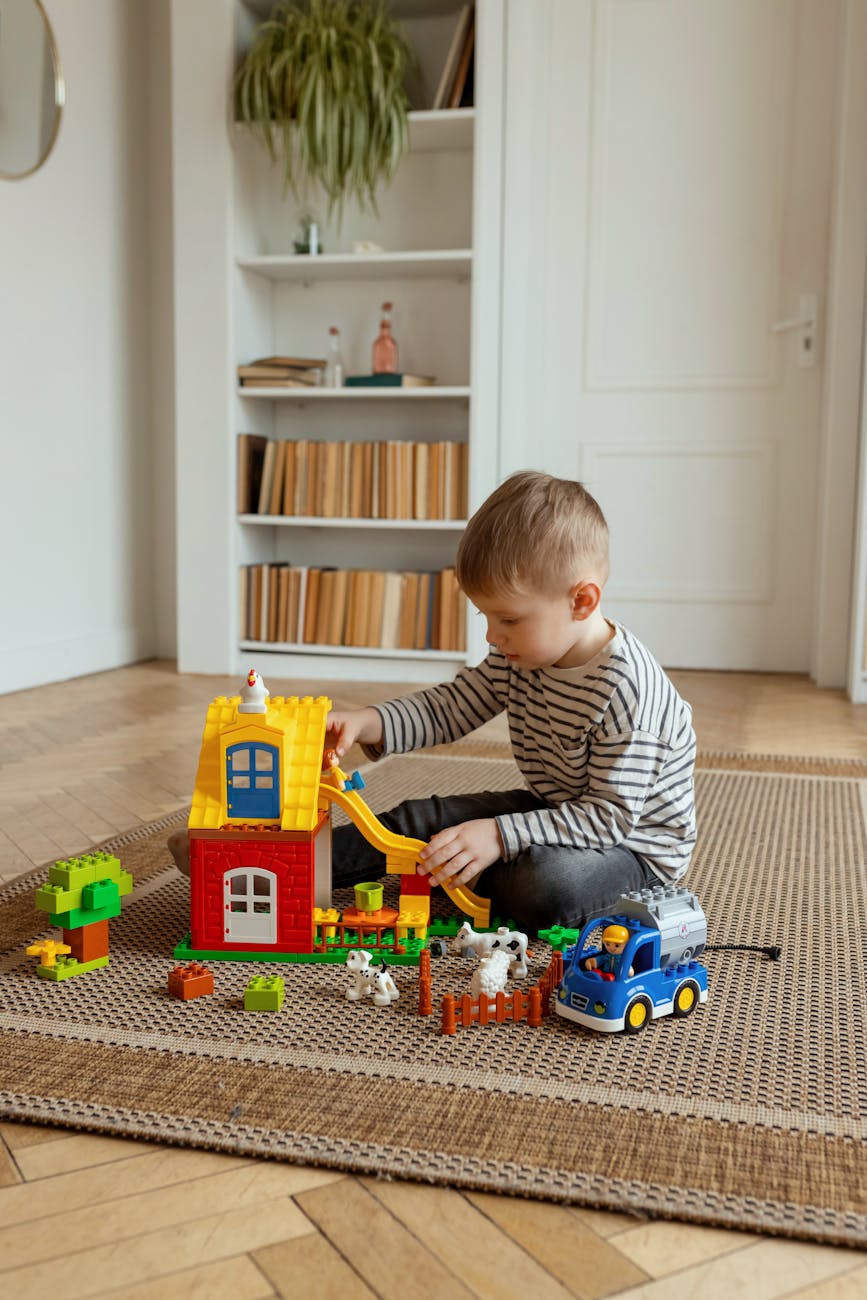
Sessions are play, structured invisibly. A session opens with a greeting routine the child can predict. The therapist sets up the play environment to embed the day’s targets in activities the child already enjoys. When the child requests a toy correctly, they get the toy. When the child uses a regulation strategy independently, the therapist notices without disrupting the moment.
Parents make the skills stick. Generalisation — a skill carrying over from the session into ordinary daily life — is the whole game, and skills taught only in session don’t stick. Each session ends with a parent debrief: what we worked on, what improved, one specific thing to repeat at home this week. The hour with the therapist is the easy hour; the plan is designed for the other 167.
The first two weeks are assessment and pairing — the FBA, the written plan, and the therapist earning the child’s trust. Most families see the first target skills emerge between weeks three and eight; fewer meltdowns is usually the first change parents report. By months three to six, skills generalise from session to home, and intensity is adjusted on data. Beyond six months, programmes either transition to maintenance, integrate with school readiness, or step down.
Most children run 4–6 sessions per week of 30 minutes each. The forty-hour weeks sometimes quoted online reflect specific research protocols, not what most children need. We treat the data, not a fixed prescription.
Online delivery is not a compromise version of ABA; for the skills we target, it is often the better version. The child works in the environment where the skills actually need to hold — their own home, their own toys, their own triggers. The parent is present at every session and co-delivering all week. The published evidence on telehealth-delivered behavioural intervention is now substantial.
For families in India the practical case is just as strong. Trained behaviour analysts are concentrated in a handful of metros; families in smaller cities routinely face long waitlists, long commutes, or no local option at all. Online ABA means a child in Kochi or Chandigarh sees the same senior analyst, on the same schedule, as a child in Bengaluru — without the family reorganising their week around traffic.
Sessions are priced per session, with weekly multi-session intensities available as bundles. The first 30-minute consultation is free and carries no obligation — it is a conversation with a clinician, not a sales call. If we don’t think ABA is the right starting point for your child, we will say so and point you to what is.
The American Academy of Pediatrics identifies behavioural intervention as a first-line, evidence-supported approach for autism (Hyman et al., 2020). Cochrane’s systematic review of early intensive behavioural intervention finds evidence of gains in adaptive behaviour and cognition, while noting — honestly — that study quality varies, which is one reason we anchor every plan to each child’s own data rather than to averages. Our analysts work within the Behavior Analyst Certification Board’s ethics code, including its requirements around assent, least-restrictive procedures, and family involvement. Full citations are listed below.
Before changing a behaviour, we understand it. The FBA maps the function — escape, attention, sensory, access — and the plan addresses the function, not the surface.
Modern, play-based ABA (clinicians call it NDBI): the child leads, teaching is woven into the game, and rewards come from the child's own interests. Drills exist where they help; not as the spine.
Skills taught only in session don't stick. Every plan includes parent coaching — short daily routines that turn breakfast and bath-time into therapy.
Per-session pricing varies with session length, modality, and senior-clinician supervision. We share the full quote with you before any commitment — and the first 30-minute consultation is always free.
Still deciding if aba therapy with NeuroNurture is right for your child? These are the questions parents most often bring to a first call.

The criticism is mostly directed at older drill-heavy compliance-focused models that treated autistic ways of being as deficits to extinguish. Modern ABA — how we practise it — is naturalistic, child-led, neurodiversity-informed. We do not target stimming. Skill-building is the goal; making your child appear neurotypical is not.
No. The high-hour intensities sometimes quoted reflect specific research protocols. For most families, 4 to 6 sessions per week, ramping up or down as data warrants, is what we recommend. We treat the data, not a fixed prescription.
Our behaviour therapists are senior clinicians with formal training in applied behaviour analysis, working under recognised credentialing pathways. Plans are reviewed by our team of developmental paediatricians every four weeks.
No. ABA is one evidence-supported intervention; speech, OT, and parental coaching are others. For most autistic children we use ABA as one element of a multi-modal plan, not the entire plan. See our Autism Programme.
Yes — particularly for the target areas we focus on (functional communication, regulation, daily-living skills). Home is the actual environment where the child needs the skills to hold. The parent is co-delivering all week. The published evidence on telehealth ABA outcomes is now substantial.
Medically reviewed by Dr. Neha Kukreja, Chief Medical Officer & Developmental Paediatrician. Educational content; not a substitute for clinical consultation.
A multidisciplinary online autism programme for children — coordinating speech therapy, ABA, occupational therapy, and parental coaching under one paediatrician-authored plan.
Doctor-supervised early intervention for children aged 0 to 3 years — the brain's most plastic developmental window. Family-first, play-based, online sessions with weekly written progress reports.
Online parental coaching for parents of children with developmental, behavioural, or learning needs. Structured parent-management training, daily-routine design, and the operating-manual handoff.
30 minutes with a developmental paediatrician or senior therapist. We assess your child's needs and recommend the right programme. Free, no obligation.