
Sensory-integration informed assessment
Structured occupational profile (Sensory Profile-2 or equivalent), parent + teacher report, and home-environment observation. Clear sensory profile, prioritised goals.
Sensory regulation, fine and gross motor skills, handwriting, feeding, and the daily-living skills that unlock school readiness and independence. Delivered online, with parent coaching built in.
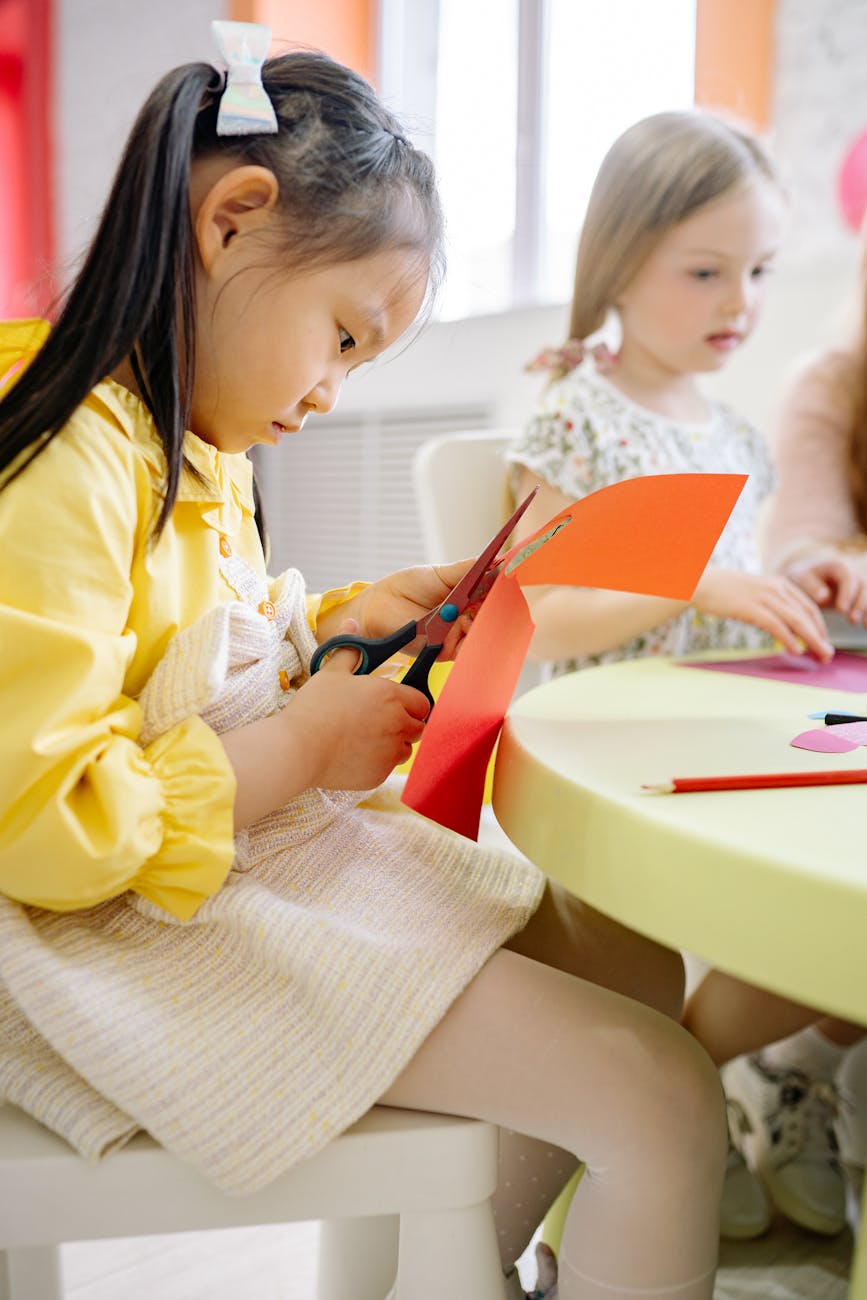
A 30-minute consultation with a developmental paediatrician or senior therapist. We listen, observe, and give you an honest read on whether occupational therapy is the right starting point.
Occupational therapy (OT) helps children master the “occupations” of childhood — playing, eating, dressing, writing, sleeping, learning — by addressing the sensory and motor systems underneath them. An occupational therapist assesses why ordinary tasks are costing a child more effort than they should, then works through structured, play-based sessions and daily-routine changes to close the gap. At NeuroNurture, OT is delivered online, 1-on-1 with a parent present, under a developmental paediatrician’s supervision.
A four-year-old who hates the seam in her socks. A six-year-old whose handwriting cannot be read by his teacher. A seven-year-old who refuses everything that has been touched by water. From the outside these look like different problems. From the inside, they are often the same problem at different ages: a sensory and motor system processing the world in a way that makes ordinary tasks expensive. The gap is rarely solved by trying harder — it’s solved by understanding why the system is overloaded, and adjusting either the system or the demands on it.
Most children who come to our OT programme fit one of six patterns: sensory processing differences (over- or under-responsiveness to touch, sound, movement, textures); fine-motor and handwriting struggles flagged at school; dyspraxia and motor-planning difficulty; feeding aversions and extreme picky eating; gaps in daily-living skills — dressing, sleeping, toileting, mealtimes; and school-readiness gaps in attention-to-task and sitting tolerance. Many autistic and ADHD children carry several of these at once, which is why OT is frequently one strand of a multi-modal plan rather than a standalone.
Sensory processing is the brain’s job of taking constant input from the world and prioritising what to attend to. For most adults, the brain does this without conscious effort. For roughly 5–16% of children — depending on the population studied — sensory processing is either over-responsive (the seam is unbearable) or under-responsive (the child seeks intense input — bumping, pressing, mouthing).
Either pattern, left unsupported, makes ordinary daily tasks expensive. The work of OT is to give the child’s nervous system the input it actually needs and to teach the family how to deliver that input as part of the day.
We are not trying to make children less sensitive. We are trying to make the world’s demands match what their nervous system can deliver, without exhausting them by mid-afternoon.
Assessment maps the sensory profile first. We use a structured occupational profile (Sensory Profile-2 or equivalent), parent and teacher report, and observation of the child in their own home environment — which online delivery makes native rather than simulated. The output is a written profile and prioritised goals, signed off by our developmental paediatrician.
Therapy is embedded in daily routines. OT works best inside real life — meal-times, bath-times, dressing routines — not as an isolated clinic hour. Sessions coach both child and parent into using everyday moments as therapy, so the routines that were battlegrounds become the practice field.
Equipment-light by design. You do not need a sensory room. We build programmes around what’s already in the home — cushions, scarves, kitchen tools, a soft brush. The hands-on inputs — heavy-muscle work like pushing, carrying, and firm calming pressure — are delivered by the parent, coached live on video by the therapist.
Handwriting is treated upstream. Illegible handwriting is usually a symptom — of pencil grip, postural stability, fine-motor strength, or visual-motor integration. We assess those components systematically and treat the one that’s actually failing, rather than drilling letter formation onto a wobbly foundation.
Sessions run 30 minutes, once or twice weekly. In the first four weeks the sensory profile is mapped and regulation routines start to embed — calmer transitions and bedtimes are usually the first change parents notice. Months two to four bring measurable movement on the targeted goals: handwriting, fasteners, feeding range, attention-to-task. By months four to nine, skills generalise across contexts — new foods eaten, buttons managed, transitions completed independently. Beyond that, programmes either step down to maintenance, integrate with school accommodations, or graduate. Weekly written progress notes and four-weekly paediatric review run throughout.
Most parents who come to OT with a specific complaint discover the bigger payoff is the broader independence that emerges. By month six, many of our children are doing things they weren’t doing in month one: putting on their own shoes, brushing their own teeth, sitting through dinner with the family, falling asleep without elaborate routines. That is what we are after.
The intuition that OT must be hands-on-in-clinic is common and understandable — and the evidence says otherwise for the domains we treat. The therapist’s real job is assessment, planning, and coaching the adult in the room; the parent delivers the physical inputs, coached in real time. The child practises regulation and daily-living skills in the exact environment where they must hold. For Indian families, the access argument compounds this: qualified paediatric OTs are scarce outside metro cities, and online delivery brings the same senior therapist to Kochi or Chandigarh as to Bengaluru — without waitlists or commutes.
Sessions are priced per 30-minute session; monthly bundles are typically the most economical for ongoing weekly work. Sensory-integration assessments and feeding-specific intensive blocks are priced separately and quoted transparently after the free consultation. The first 30-minute consultation is free, with no obligation.
Our practice framework follows the American Occupational Therapy Association’s Occupational Therapy Practice Framework (4th edition). On sensory integration specifically, we hold the same line as the American Academy of Pediatrics’ policy statement: sensory-based therapies are one component of a comprehensive plan, measured against functional goals — not a standalone cure. The systematic-review evidence on Ayres’ Sensory Integration (Schaaf et al.) supports structured, fidelity-monitored sensory work for autistic children. Full citations are listed below.
Structured occupational profile (Sensory Profile-2 or equivalent), parent + teacher report, and home-environment observation. Clear sensory profile, prioritised goals.
OT works best embedded in real life — meal-times, bath-times, dressing routines. Sessions coach both child and parent into using everyday moments as therapy.
Parents don't need a sensory-room of equipment. We work with household items — cushions, scarves, kitchen tools, a soft brush — designed around what's already in the home.
Per-session pricing varies with session length, modality, and senior-clinician supervision. We share the full quote with you before any commitment — and the first 30-minute consultation is always free.
Still deciding if occupational therapy with NeuroNurture is right for your child? These are the questions parents most often bring to a first call.

Many people share that intuition. The hands-on parts of OT — heavy-muscle input, firm calming pressure, movement and balance work — are delivered by parents, coached in real time over video. The therapist's job is increasingly the assessment, planning, and coaching of the in-room adult. For sensory regulation, fine-motor, handwriting, ADL, and feeding work, online has a strong evidence base.
Physiotherapy focuses on gross motor, strength, range of motion, and recovery from physical injury. OT focuses on the activities of daily life — feeding, dressing, playing, schoolwork, regulation — and the underlying sensory and motor processes that support them.
Often yes — particularly when the picky-eating is driven by sensory aversion to texture, smell, or oral-motor difficulty. We assess feeding under our OT programme and design a structured step-by-step programme — the child first tolerates the food nearby, then touches it, then tastes it (the SOS feeding approach). Quick fixes here tend to backfire.
The right question is whether OT can address what's upstream of the handwriting — fine-motor strength, pencil grip, postural stability, and how the eyes and hands work together (visual-motor integration). Often it can. We assess these systematically before promising an outcome. For older children where components are intact, we work directly on letter-formation drilling.
Pricing is shared transparently after the free assessment. Sensory-integration assessments and feeding-specific intensive blocks are priced separately and quoted transparently after the free consultation. Monthly bundles are typically the most economical for ongoing weekly work.
Medically reviewed by Dr. Neha Kukreja, Chief Medical Officer & Developmental Paediatrician. Educational content; not a substitute for clinical consultation.
Doctor-supervised early intervention for children aged 0 to 3 years — the brain's most plastic developmental window. Family-first, play-based, online sessions with weekly written progress reports.
A multidisciplinary online autism programme for children — coordinating speech therapy, ABA, occupational therapy, and parental coaching under one paediatrician-authored plan.
Online special education for children with dyslexia, learning disabilities, intellectual disability, and learning differences — using structured-literacy, multisensory, and individualised academic support.
30 minutes with a developmental paediatrician or senior therapist. We assess your child's needs and recommend the right programme. Free, no obligation.